
Retirement income Planning for Individuals and Families
Retirement income planning is the work of turning accumulated savings, Social Security, pensions, and other sources into the income that supports you across retirement. Your adviser can help you work through related decisions, develop a plan, and adjust the strategy as your circumstances and the tax landscape change.
How We Manage Nonprofit and Association Investment Portfolios

How long will your money last? How much can you spend without running out? When should you take Social Security, and where should the rest of your income come from? Planning for retirement is complex, and the earlier you start planning for your retirement income, the more flexibility you’re likely to have. The decisions are connected: how much you withdraw affects your tax bracket, your tax bracket affects whether a Roth conversion makes sense, Roth conversions affect Medicare premiums, and Medicare premiums affect what is left to spend.
Our team works with individuals and families approaching retirement and in the years that follow. The engagement spans the decisions that come up before retirement, like sizing Roth conversions and timing your last working year, through the ongoing decisions across retirement, like adjusting withdrawals through changing markets, managing required distributions, and coordinating with your CPA and estate attorney.
Timing aside, the goal is the same: understanding where your retirement income will come from each year.
Common retirement income planning considerations
Retirement income planning involves analyzing your investments and financial situation to determine where your income will come from in retirement, and understanding how to make it last. The considerations below represent some of the most common decisions Raffa works through with individuals and families before and during retirement.
Sustainable Spending
Withdrawal Sequencing
Social Security Claiming
Required Minimum Distributions
Roth Conversions
Pension & Annuity Choices
401(k) and 403(b) Rollovers
Spending through retirement Phases
Our Approach to Retirement Income Planning
Retirement income planning is an ongoing process. Your strategy is built around your goals and financial situation as you approach retirement and adjusted as your spending, health, family, and tax situation evolve. Our approach typically includes the following:
Understanding Your Goals and Lifestyle in Retirement
Retirement income planning is the work of building a complete picture of how a client wants to live in retirement, what that life will cost, and what income sources are available to support it. At Raffa, that conversation typically covers your current spending, what you expect to change in retirement, family obligations, healthcare expectations, charitable intent, any significant travel or large one-time expenses you have in mind, and any other significant expenses you anticipate. By gaining an understanding of the income you will need throughout retirement, your adviser can help develop an investment strategy to support it.
Developing Your Income Strategy
A retirement income strategy is the documented framework for how a client’s accumulated savings, Social Security, pensions, and other sources combine to support spending across retirement. At Raffa, building the strategy involves projecting the income each source will provide, identifying gaps that need to be filled by the portfolio, sizing each account’s role, and stress-testing the strategy against poor early returns and unexpected costs.
Sequencing Withdrawals Across Your Accounts
Withdrawal sequencing is the practice of choosing the order in which money comes out of taxable, tax-deferred, and Roth accounts to manage the lifetime tax bill rather than only the current-year bill. In general, the right sequence often depends on current tax brackets, future RMDs, expected charitable giving, the legacy intent for any remaining assets, and other considerations unique to your individual situation. Ideally, withdrawal sequencing is coordinated with your CPA and reviewed annually as tax law and circumstances change.
Integrating Social Security, Pensions, and Annuities
Social Security, pensions, and annuities are forms of guaranteed income that don’t change with markets. Coordinating these sources with the portfolio typically involves evaluating Social Security claiming timing across longevity scenarios, deciding between pension lump-sum and annuity options, weighing survivor benefit elections, and considering any annuities already owned or under consideration.
Adjusting the Strategy and Life and Markets Change
Reviewing and adjusting a retirement income strategy each year means checking that assumptions, withdrawal levels, and portfolio positioning still match what is actually happening with markets, your spending, and tax law. The most common adjustments come from market movements early in retirement, changes in health or family circumstances, and shifts in spending patterns. Withdrawal levels themselves are reviewed each year against the portfolio’s actual performance rather than fixed at retirement. Sequence of returns risk, the danger that poor returns early in retirement permanently reduce sustainable income, is an important factor to monitor in the first decade of retirement.
Coordinating with Your CPA, Estate Attorney, and Other Advisers
Coordination between your investment adviser, CPA, and estate attorney matters because decisions in one discipline almost always affect the others. For example, a withdrawal creates tax consequences, a Roth conversion interacts with the estate plan, and a real estate sale creates capital gains the tax preparer needs to plan for and portfolio liquidity decisions the investment adviser should help make. Treating the professionals involved in your finances as a team, rather than working with each in isolation, means each one has the additional context they need to make informed decisions.
Knowledge is Meant to be Shared
Raffa Insights & Resources

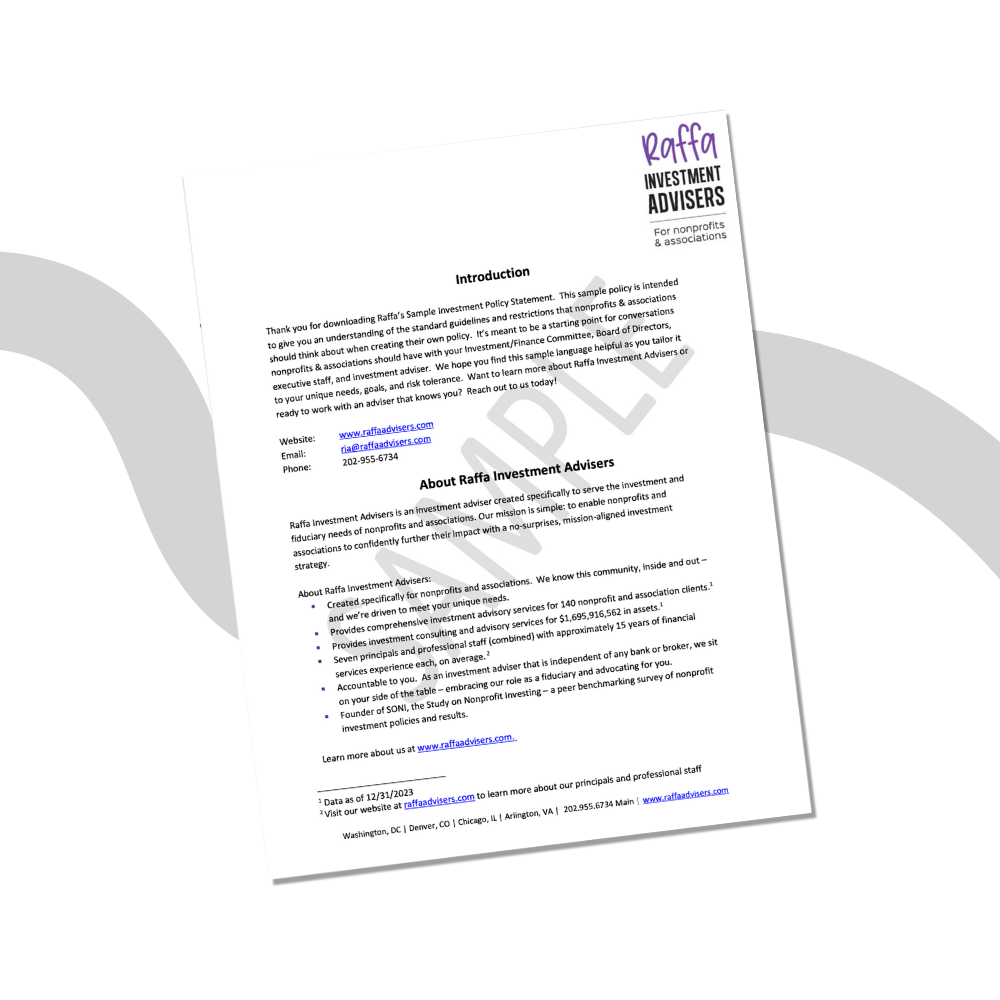

Frequently Asked Questions About Retirement Income Planning
How much money do I need to retire?
There is no single answer to how much someone needs to retire as the number depends on spending expectations, time horizon, income sources, and the individual’s tax situation. A common rough estimate is 20 to 25 times your annual essential spending, net of Social Security and other income sources in invested assets. A more useful answer often involves a personalized projection that models your expected spending, expected income, and a range of investment outcomes.
When should I take social security?
The decision of when to claim Social Security depends on expected longevity, marital status, other income, and whether you plan to keep working. For individuals with average or longer-than-average expected longevity, delaying claiming past full retirement age increases the monthly benefit by roughly 8 percent per year up to age 70. Spousal claiming strategies and survivor benefits add another layer of decision-making for couples. The right answer is rarely the same for everyone in a household.
How do required minimum distributions work?
Required minimum distributions (RMDs) are the amounts the IRS requires retirement account holders to withdraw each year from most pre-tax retirement accounts. The starting age under current tax law is 73 for those born between 1951 and 1959 and 75 for those born in 1960 or later. It is important to remember that RMDs add taxable income to the year they are taken and can interact with Social Security taxation, Medicare IRMAA surcharges, and capital gains rates. Planning ahead can include strategies such as Roth conversions in lower-income years to reduce the size of future RMDs, or Qualified Charitable Distributions (QCDs), which satisfy part or all of an RMD without adding to taxable income.
Should I do a Roth conversion in retirement?
Whether a Roth conversion makes sense in retirement depends on your current tax bracket relative to the brackets you expect during RMD years, the size of your pre-tax balance, your state tax rules, and how the conversion will interact with Medicare IRMAA thresholds. As the years between retirement and the start of Social Security or RMDs are often the lowest-income years of a lifetime, they can be a useful window for sizing conversions. Reviewing this decision with your investment adviser and CPA helps determine the timing that best supports your and your family’s goals in retirement.
How should long-term care be built into a retirement plan?
Long-term care is one of the largest unfunded retirement risks and can be addressed through some combination of self-funding, long-term care insurance, and family planning. For individuals and families, planning ahead typically involves earmarking a portion of the portfolio for late-life care, evaluating if insurance would be useful during the years when underwriting is still favorable, and reviewing how long-term care fits into the broader retirement income strategy.
When should I roll over my 401(k) or 403(b) to an IRA?
If you are deciding whether to roll over a 401(k) or 403(b) to an IRA, it is important to consider factors such as the investment options in the employer plan, the fees, the legal protections that differ between plan types, and the planning flexibility the IRA would provide. Common reasons to roll over an account include consolidating accounts for simpler management, accessing a wider range of investments, planning for Roth conversions, and integrating the assets with a personal investment strategy. Common reasons to leave assets in the employer plan include lower-cost institutional share classes, the ability to take penalty-free distributions starting at age 55 in some cases, and stronger creditor protections in some states. Your investment adviser can help you understand the impact rolling a 401(k) or 403(b) into an IRA would have on your tax situation, investment options, and broader retirement income strategy.
Contact Us
Schedule a Conversation to Discuss Your Retirement Income Strategy
Disclosures:
Raffa Wealth Management, LLC dba Raffa Investment Advisers (“Raffa”) is an SEC-registered investment adviser. Registration with the SEC does not imply a certain level of skill or training.
The information presented on this website is for informational and educational purposes only and does not constitute personalized investment, tax, or legal advice. No client relationship is created by viewing this content. Decisions regarding financial strategies should be made based on an individual’s specific financial situation, objectives, and risk tolerance, and in consultation with appropriate professionals.
All investing involves risk, including the potential loss of principal. Any references to retirement income planning, withdrawal strategies, or sustainable spending levels are based on general assumptions and do not guarantee future results. Actual outcomes will vary based on market performance, inflation, longevity, tax changes, and other factors. Past performance is not indicative of future results.
Examples, estimates, and general rules of thumb (including spending or savings guidelines) are provided for illustrative purposes only and may not apply to all individuals or situations. Forward-looking statements and planning projections are inherently uncertain and are not guarantees of future outcomes. Certain income sources referenced, such as Social Security, pensions, or annuities, may be considered more predictable; however, they are subject to eligibility requirements, policy terms, and, in some cases, the financial strength of the issuing institution. Discussions related to tax planning, including Roth conversions and required minimum distributions, are general in nature. Raffa does not provide tax or legal advice. Clients should consult their CPA or legal adviser regarding their specific situation. When considering whether to roll over assets from an employer-sponsored retirement plan to an IRA, individuals should carefully evaluate all relevant factors, including fees, investment options, services, and legal protections. In some cases, Raffa may have a financial incentive to recommend such a rollover, which creates a potential conflict of interest.
Additional information about Raffa’s services, fees, and conflicts is available in its Form ADV Part 2A.