
Retirement Plan Advisory for Nonprofits and Associations
Fiduciary support for nonprofit and association plan sponsors across qualified retirement plans such as 401(k) and 403(b) plans and deferred compensation arrangements like 457(b) and 457(f) plans. Work with a retirement plan adviser primarily focused on the nonprofit and association community.
Investment Advisory for Nonprofit & Association Retirement Plans

For nonprofit and association employers, retirement plans support employee financial security and play a role in attracting and retaining staff. Many organizations offer a qualified plan, such as a 401(k) or 403(b), for the broad employee base with some organizations adding a deferred compensation arrangement, such as 457(b) or 457(f), for executive retention. Each plan type has its own rules, fiduciary considerations, and oversight obligations that the plan sponsor is responsible for understanding.
For nonprofits and associations, our retirement plan support focuses on the investment side of oversight: fund selection within the plan, investment monitoring, fee benchmarking, vendor coordination, and participant education. The same fiduciary disciplines that support this work, defined frameworks, clear roles, and consistent documentation, also support our investment management work for nonprofit and association reserves.
Common Retirement Plans for Nonprofits & Associations
Nonprofits and associations typically use one or a mix of these four plan types when offering retirement benefits to their employees. Qualified retirement plans, like 401(k) and 403(b), and deferred compensation plans, like 457(b) and 457(f), each serve a different purpose and operate under different rules.
401(k) Plans
403(b) Plans
457(b) Plans
457(f) Plans
How We Support Nonprofit Plan Sponsors Across Retirement Plans
Retirement plan oversight includes ongoing work that spans several connected areas, from investment decisions and fee evaluations to vendor coordination, fiduciary documentation, and participant support. Each requires an understanding of the complexities of the plan type and significant attention to fiduciary oversight.
Selecting and Monitoring Plan Investments
Investment selection for a nonprofit or association retirement plan involves choosing funds that meet fiduciary standards on cost, performance, consistency, and overall fit within the lineup. We work alongside plan sponsors to apply consistent criteria for fund evaluation and recommend changes when a fund no longer meets expectations. Each decision is documented to support the rationale and provide continuity across committee transitions.
Evaluating Plan Fees
Retirement and deferred compensation plan costs typically include investment expenses, recordkeeping fees, administrative fees, and, on occasion, revenue-sharing arrangements between providers. Due to the multiple facets of the fee, it can be challenging to calculate the total fee. Evaluating fee reasonableness often requires calculating and comparing the total fee to plans of similar size and complexity. We help nonprofit and association plan sponsors work towards fee transparency and complete peer comparisons.
Working with Recordkeepers and Other Service Providers
Nonprofit and association retirement plans typically rely on multiple service providers, including recordkeepers, third-party administrators, and specialized vendors. Each plays a different role, and the lines between each role can become unclear or blur over time. We help plan sponsors communicate across the full team, maintain alignment across providers, and, when warranted, run a structured request for proposal process to evaluate alternatives.
Fiduciary Decision-Making and Documentation
Fiduciary decision-making is the process a plan sponsor uses to evaluate, decide, and document choices about a retirement plan. At a nonprofit or association, this typically includes setting the cadence for committee review, the criteria used to evaluate investments and providers, and the records that capture each decision and its rationale. We assist plan sponsors as they develop and refine this fiduciary process.
Supporting Plan Participants
Nonprofit or association retirement plan participants often benefit from advice from an investment adviser when making decisions regarding their retirement plan. Our advisers can assist plan participants with one-on-one discussions to understand their retirement goals and offer insight into investment selection. We also provide group education sessions focused on helping participants understand their plan and the importance of saving for retirement.
Raffa Insights & Resources
Created for the nonprofit and association community

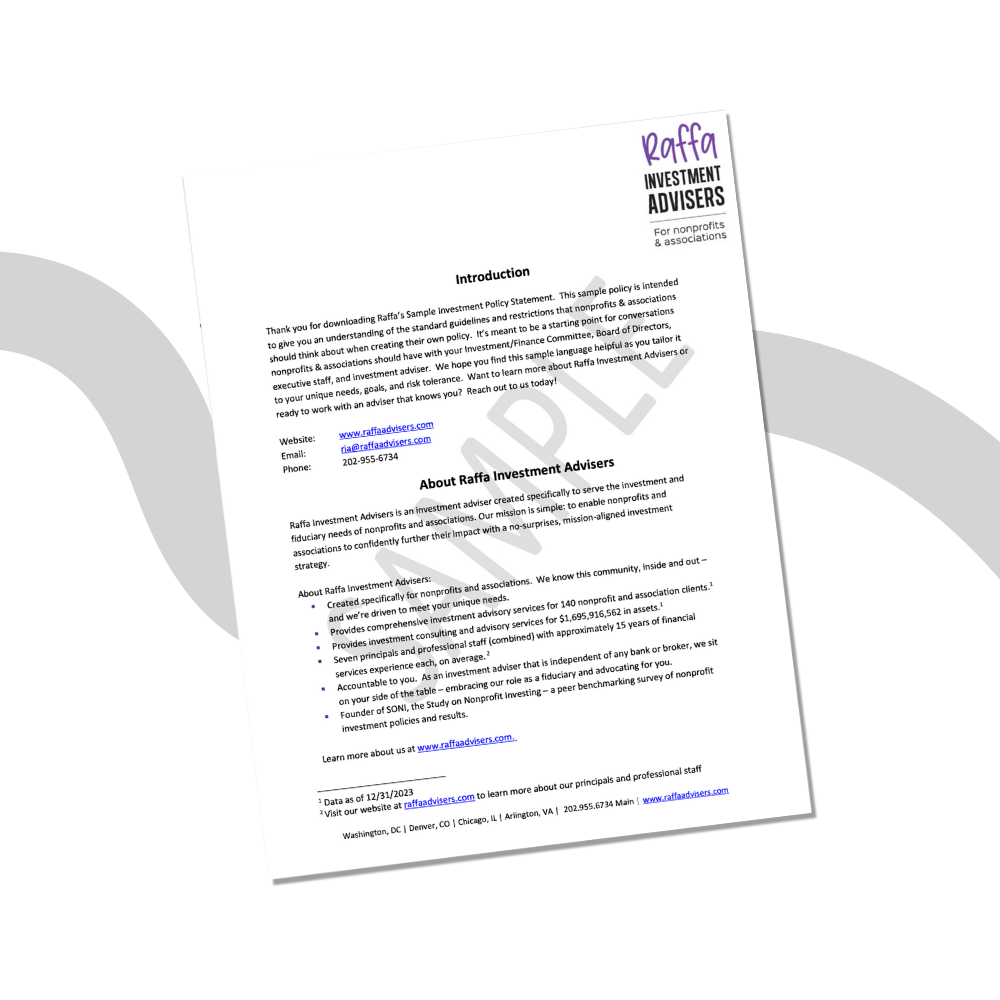

Frequently Asked Questions About Nonprofit Retirement Plan Advisory
What does a nonprofit retirement plan adviser do?
A nonprofit retirement plan adviser supports plan sponsors with the investment-related aspects of fiduciary oversight, including investment selection and monitoring, fee benchmarking, vendor coordination, and participant education. At a nonprofit or association, this typically spans qualified plans like 401(k) and 403(b), as well as non-qualified deferred compensation arrangements like 457(b) and 457(f). The adviser works alongside the plan committee, HR team, and service providers to bring structure and consistency to plan oversight over time.
What is the difference between a qualified retirement plan and a non-qualified deferred compensation plan?
Qualified retirement plans, such as 401(k) and 403(b), are typically subject to specific tax and ERISA requirements that govern eligibility, contribution limits, vesting, and reporting. Non-qualified deferred compensation plans, such as 457(b) and 457(f), are typically not subject to those same requirements but generally must be limited to a select group of management or highly compensated employees at a nonprofit or association. The two serve different purposes: qualified plans support broad-based retirement savings, while deferred compensation arrangements typically focus on executive retention.
What should a nonprofit consider when choosing a retirement plan adviser?
When choosing a retirement plan adviser, a nonprofit or association should consider whether the adviser specializes in serving nonprofits and associations, what fiduciary role they take on (3(21) co-fiduciary or 3(38) discretionary fiduciary), their approach to fee transparency, how they coordinate with existing service providers, and their experience with the plan types the organization sponsors. The right adviser brings consistent, documented support across investment, fee, and governance decisions.
What should a fiduciary review of a nonprofit retirement plan cover?
A fiduciary review of a nonprofit or association retirement plan typically covers total plan costs, investment lineup structure and performance, recordkeeper service quality, plan design relative to organizational goals, and the decision documentation that supports fiduciary actions. The goal is to identify whether the plan is operating consistently and as intended, identifying and resolving any areas where the plan is no longer aligned with defined expectations.
How does nonprofit retirement plan oversight relate to other fiduciary responsibilities at the organization?
Retirement plan oversight and reserve oversight are separate fiduciary responsibilities at a nonprofit or association, but the underlying disciplines are similar: defining objectives, building a documented process, monitoring outcomes against benchmarks, and coordinating across decision-makers. Raffa Investment Advisers works with clients across both areas, applying a consistent approach to fiduciary structure and decision support.
Schedule a Fiduciary Review of Your Nonprofit Retirement Plan
Disclosures:
The information provided on this page is for general informational and educational purposes only and does not constitute individualized investment, legal, tax, or accounting advice. Raffa Investment Advisers (“Raffa”) is a registered investment adviser. Registration does not imply a certain level of skill or training.
Advisory services for nonprofit and association retirement plans, including qualified plans such as 401(k) and 403(b) plans and non-qualified deferred compensation arrangements such as 457(b) and 457(f) plans, are provided only pursuant to a written investment advisory agreement and are limited to the scope of services agreed upon with each client. References to fiduciary support reflect Raffa’s investment advisory role and do not include legal, tax, or plan drafting services.
Fiduciary status, discretion, and responsibilities, if any, are defined solely by written agreement and may vary based on plan type and engagement structure. Participant education and guidance may include general investment information and, where applicable, individualized advice provided pursuant to an advisory relationship.
Organizations and plan participants should consult their legal, tax, and other professional advisers regarding plan design, compliance, and individual circumstances. Investment strategies involve risk, including the potential loss of principal. Past experience or references to services do not guarantee future results.